- Warehouse Wisdom. Weekly.
- Posts
- Warehouse Wisdom, Weekly. 02/20/2026
Warehouse Wisdom, Weekly. 02/20/2026
Only the most relevant news for SMBs to improve logistics – picked, packed, and delivered without the bias.

Will Schneider
February 20, 2026
In partnership with


🚚 Happy Friday.
If you blinked this week, you might have missed commerce accelerating into what feels like hyperspeed. Walmart is now averaging under-hour express delivery in select markets, pushing the definition of “fast” into territory that would have sounded unrealistic just a few years ago. Meanwhile, OpenAI is expanding its agentic commerce push, signaling a future where AI does not just recommend products but actively shops, compares, and executes purchases on behalf of consumers. In other words, the race for speed and automation is officially on.
In this week’s edition, we break down Amazon overtaking Walmart, Shopify’s continued growth streak, a $4 billion ocean carrier acquisition, falling Asia–U.S. container rates, rising truckload pricing, and mounting tariff pressure facing midsize businesses. Let’s dive in!
Online Marketplaces
Amazon overtakes, Walmart surges, Shopify grows, and TikTok backs down

Amazon has officially dethroned Walmart in overall sales, marking a symbolic and strategic shift in retail dominance. Digital shelf space continues to win market share over physical aisles, reinforcing the structural shift toward online-first retail.
Walmart, however, is hardly conceding ground. The retailer’s e-commerce sales topped $150 billion for the first time, signaling that its omnichannel strategy is operating at enormous scale. Walmart is not just participating in the online race. It is sprinting.
Shopify maintained 30 percent growth in revenue and gross merchandise volume in Q4 2025. For independent brands and SMB operators, Shopify’s expansion shows that businesses do not need to rely exclusively on marketplaces to scale online.
TikTok reversed course after backlash from sellers over its plan to end independent shipping for U.S. merchants. The halt suggests that even fast-growing platforms must move carefully when adjusting fulfillment rules.
Know What Matters in Tech Before It Hits the Mainstream

By the time AI news hits CNBC, CNN, Fox, and even social media, the info is already too late. What feels “new” to most people has usually been in motion for weeks — sometimes months — quietly shaping products, markets, and decisions behind the scenes.
Forward Future is a daily briefing for people who want to stay competitive in the fastest evolving technology shift we’ve ever seen. Each day, we surface the AI developments that actually matter, explain why they’re important, and connect them to what comes next.
We track the real inflection points: model releases, infrastructure shifts, policy moves, and early adoption signals that determine how AI shows up in the world — long before it becomes a talking point on TV or a trend on your feed.
It takes about five minutes to read.
The insight lasts all day.
Global Logistics
Ocean consolidation, slumping imports, and a $1.5 Trillion warning

Hapag-Lloyd is acquiring ZIM in a $4 billion deal, continuing the wave of ocean carrier consolidation. Fewer carriers often means stronger capacity discipline and potentially firmer long-term rate strategies.
The International Chamber of Shipping warned that a proposed $1.5 trillion port fee plan could disrupt global trade. Regulatory changes of that scale would ripple quickly through transportation budgets.
Asia to U.S. container rates continue to fall, offering short-term relief to importers but signaling continued softness in global demand.
The Port of Los Angeles reported a January import slump, reinforcing that West Coast volumes remain under pressure.
Logistics Vitals
Two platforms now control half of U.S. e-commerce

Amazon and Shopify now account for roughly half of all U.S. e-commerce sales. Key numbers:
Amazon and Shopify combined represent approximately 50% of total U.S. online retail sales
Amazon alone controls roughly 37% to 38% of U.S. e-commerce
Shopify merchants account for approximately 10% to 12% of the market
The remaining 50% is split across thousands of retailers and niche platforms
U.S. e-commerce represents roughly 15% to 16% of total retail sales
Half of all digital dollars now flow through just two ecosystems.
Freight and Shipping
Truckload rates rise, FedEx tightens strategy, and tariffs squeeze SMBs
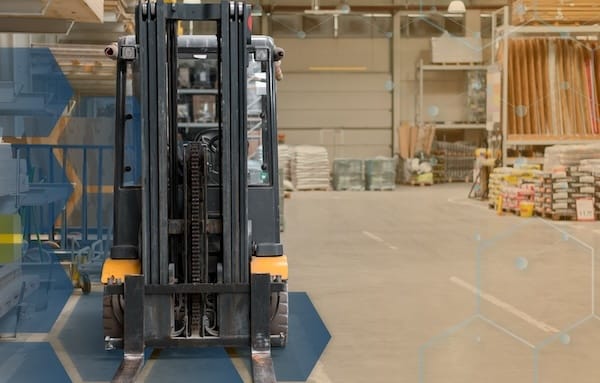
Truckload rates are rising again despite flat volumes, signaling strengthening carrier discipline.
FedEx is doubling down on premium e-commerce and delivery surcharges, tightening focus on profitable shipments and scrutinizing shipping characteristics.
Tariff costs for midsize U.S. businesses reportedly tripled in 2025, creating immediate margin pressure for import-dependent companies.
Warehouse Tech
AI builds ships, Amazon pulls the plug, and FBA sellers get a reality check

A Canadian shipyard is turning to AI and robotics to automate complex shipbuilding tasks, expanding automation beyond traditional warehouse environments.
Amazon reportedly shut down its Blue Jay robotics project in under six months, a reminder that not every innovation makes it past early deployment.
For Amazon FBA sellers, machine learning promises come with practical limitations. Technology amplifies strategy. It does not replace disciplined execution.
Warehouse Quick Deliveries
Arctic shipping hits records and retail holds steady
Arctic ship traffic hits record levels in 2025
US retail metrics staying the course this year
"Amazon and Shopify now represent half of U.S. e-commerce, a level of platform concentration that would have been unthinkable a decade ago."