- Warehouse Wisdom. Weekly.
- Posts
- Warehouse Wisdom, Weekly. 06/05/2026
Warehouse Wisdom, Weekly. 06/05/2026
Only the most relevant news for SMBs to improve logistics – picked, packed, and delivered without the bias.

Will Schneider
June 05, 2026
In partnership with


🚚 Happy Friday!
If you’ve been wondering whether the AI hype train is finally running low on fuel, you’re not alone. While companies have spent the past two years racing to sprinkle artificial intelligence across every corner of their operations, some are starting to tap the brakes. A growing number of businesses are scaling back AI initiatives after discovering that not every shiny new tool delivers the promised results. At the same time, America’s truckers are finding a much simpler way to improve efficiency: slowing down. Faced with persistent operating costs, many carriers are shaving a few miles per hour off their cruising speeds to stretch fuel budgets a little further. Sometimes the best optimization strategy is still the least complicated one.
This week, we’ll cover Amazon’s latest marketplace changes, Walmart’s accelerating ecommerce growth, rising freight costs, cargo theft concerns, expanding tariffs, AI successes and failures in warehouse operations, and much more. Let’s dive in!
Let’s dive in!
Online Marketplaces
Amazon, Walmart, & AI race to win the next wave of online shoppers

Amazon is turning its own AI shopping technology into a tool other retailers can use, starting with Kate Spade New York. The company’s new AWS Agentic Shopping Assistant lets retailers build customized AI shopping agents, and Kate Spade is already using it for an AI Gift Concierge. Translation: Amazon is not just competing in ecommerce anymore, it is selling the tools that may shape how everyone else competes too. Because apparently being the 800-pound gorilla was not enough.
Amazon is also tightening the screws on seller-fulfilled orders. Starting June 29, sellers with inaccurate handling times may see Amazon step in and manage those SKUs directly. The company says more than 87% of U.S. seller-fulfilled orders are handled within one day, and every one-day improvement in promised delivery time leads to an average 5% sales increase. For sellers, this is a friendly reminder that “I’ll ship it when I get to it” is not exactly Amazon’s preferred fulfillment strategy.
Prime Day is also moving up this year. Amazon’s 2026 event will run June 23 through June 26, with the company timing the promotion ahead of the FIFA World Cup and July 4 celebrations. For SMB sellers, that means inventory planning, promotional pricing, and fulfillment prep need to happen earlier than usual. Nothing says summer fun quite like panic-replenishing inventory in June.
Also, Walmart Marketplace is gaining real momentum. Walmart’s U.S. third-party marketplace grew nearly 50% year over year in Q1 fiscal 2027, its fastest pace in years. Walmart Fulfillment Services also saw units shipped same-day or next-day grow nearly 150%, and Walmart can now reach roughly 60% of U.S. households within 30 minutes. For brands looking to diversify beyond Amazon, Walmart is looking a lot less like a side project and a lot more like a serious second channel.
When Did Your Business Start Running You?

What started as ownership turned into obligation.
Now you’re in every meeting, decision, and channel… not because you want to be, but because things stall without you.
It’s not a capacity issue. It’s a structure issue.
The Freedom Framework shows you how to rebuild work flows, so you can step back without things breaking down.
BELAY U.S.-based Assistants help make that real by bringing ownership to execution, so your business doesn’t rely on you to function.
Freight and Shipping
Freight costs surge as carriers, shippers, and truckers adapt

Ocean freight markets are showing signs of renewed pressure, with one shipping service experiencing a staggering $2,600 increase for container shipping. Combined with sharp increases in container pricing, it appears that many shippers are once again rushing to move freight ahead of potential trade disruptions and tariff changes.
That rush is already having consequences. Container rates on the average jumped by roughly $1,000 in just one week as importers scrambled to secure capacity. Freight carriers are rolling out peak season surcharges, and many businesses are once again confronting the possibility of higher transportation costs heading into the second half of the year.
On the parcel side, UPS is making a bigger push into cross-border industrial shipping by investing nearly $50 million into enhanced U.S.-Mexico logistics services. The company is betting that nearshoring and manufacturing growth will continue driving freight volumes between the two countries.
FedEx Freight is also entering a new chapter following its separation from FedEx. As an independent company, the LTL carrier now faces the challenge of proving it can maintain growth and profitability on its own. Investors and shippers alike will be watching closely to see how the newly independent carrier performs.
Logistics Vitals
Tariffs for forced labor?

Tariffs may be coming for countries utilizing forced labor, and the latest proposals could affect sourcing decisions across dozens of countries. Companies that rely on imported goods may need to revisit supplier relationships, landed cost calculations, and procurement strategies as the trade landscape evolves.
60 trading partners are included in the proposed forced-labor-related tariff actions.
Proposed tariff rates would be either 10% or 12.5%, depending on a country's forced labor import restrictions.
The 10% tariff group includes Canada, Mexico, the European Union, the United Kingdom, and Taiwan.
The 12.5% tariff group includes China, India, Brazil, Japan, South Korea, and Vietnam.
Supply Chain
Theft, tariffs, and labor uncertainty

The trade environment remains anything but predictable. New tariff proposals aimed at imports from China, the European Union, Mexico, and other trading partners continue adding uncertainty for businesses attempting to forecast costs and secure inventory. Many importers are accelerating purchasing decisions while they wait for greater clarity on future trade policy.
Cargo theft remains another growing concern. More than 200 companies and organizations are urging lawmakers to strengthen cargo theft legislation, citing billions of dollars in annual losses. Industry groups estimate cargo theft costs the trucking industry roughly $18 million per day and has contributed to more than $200 million in rail-related losses this year alone. As supply chains become more interconnected, protecting freight in transit is becoming just as important as managing transportation costs.
Warehouse Tech
AI winners and losers and the search for real ROI
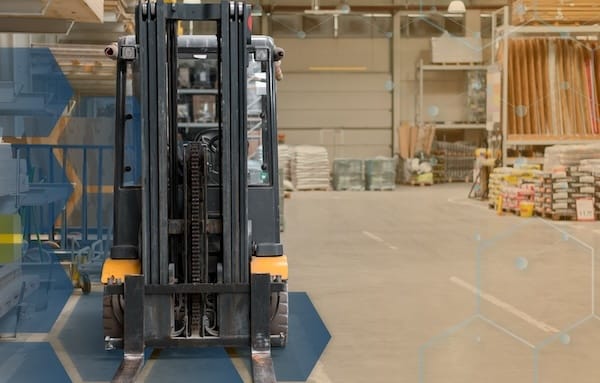
Not every AI initiative is delivering on expectations. Starbucks recently abandoned its AI-powered inventory system after just nine months, highlighting a challenge facing many organizations: implementing AI is easy, generating measurable business value is much harder. The decision serves as a reminder that technology investments still need to prove their return on investment.
At the same time, other retailers are moving aggressively in the opposite direction. Catalyst Brands, the parent company of JCPenney, is deploying humanoid robots in its distribution operations to support repetitive warehouse tasks and improve efficiency. Together, these two stories paint a realistic picture of where the market stands today. Companies are no longer adopting AI simply because it is trendy. They are increasingly focused on practical results.
Warehouse Quick Deliveries
Canada Post returns to business as usual
Canada Post employees ratify contracts, ending labor uncertainty
“If we're going to put items on our menu, we gotta be in-stock with those items.”