- Warehouse Wisdom. Weekly.
- Posts
- Warehouse Wisdom. Weekly. 09/12/2025
Warehouse Wisdom. Weekly. 09/12/2025
Only the most relevant news for SMBs to improve logistics – picked, packed, and delivered without the bias.

Will Schneider
September 12, 2025
In partnership with


Happy Friday!
Three stories define this week's supply chain chaos: the Supreme Court fast-tracked Trump's $750 billion tariff appeal with November arguments determining whether emergency powers include rewriting trade law, Union Pacific and Norfolk Southern proposed an $85 billion merger that would finally eliminate Chicago's daily 3,000-truck crosstown shuffle, and container imports officially entered free fall with August down 1.7% and 2026 starting 19% below this January.
When nine justices hold the fate of 70% of U.S. imports, railroads realize connecting their networks might be efficient, and procurement planning depends on constitutional law interpretations, logistics has officially jumped the shark.
Global Logistics
Supreme Court to decide your freight costs

Remember when emergency powers had limits? The Supreme Court's decision to hear Trump's tariff appeal on an expedited timeline suggests those days are over. November oral arguments will determine whether emergency powers include rewriting trade law or if Treasury has to cut some very awkward refund checks totaling $750 billion to $1 trillion.
These tariffs hit 10% baseline on most countries, jumping to 50% on Brazil and India, with 25% on Canada, China, and Mexico. The Tax Foundation estimates nearly 70% of all U.S. imports are affected. Collecting $30 billion monthly while courts question your legal authority apparently qualifies as emergency powers now.
The chaos extends beyond tariffs. Postal traffic to the U.S. dropped 80% after the administration ended the de minimis exemption for packages under $800. Eighty-eight postal operators suspended services because airlines and carriers can't or won't collect customs duties. The Universal Postal Union says traffic fell 81% on August 29 compared to a week earlier.
Markets react predictably to this chaos. Container volumes are in free fall for the rest of 2025. August dropped 1.7% to 2.28 million TEU, with the National Retail Federation forecasting January 2026 starting 19% below this year's levels.
Your Q4 inventory planning now depends on constitutional law interpretations. Supreme Court calendars have become procurement risk factors. Strategic planning with legal footnotes—this is where we are now.
Stop Drowning in Market News. Focus On Making Money.

Every day: 847 financial headlines, 2,300 Reddit stock mentions, 156 Twitter trading threads, 12 IPO updates, 94 crypto developments.
Your problem isn't lack of information; you have too much.
While you're scanning headlines wondering what matters, profitable trades slip by. The signal gets buried in noise.
What if someone did the heavy lifting for you?
Stocks & Income reads everything:
Twitter traders
Reddit buzz
IPO announcements
Crypto insider takes
Crowdfunding opportunities
Market news
Then we send you only what can actually move your portfolio.
No fluff. No useless news. Just actionable stock insights in 5 minutes.
We track every source so you don't have to. You get the 3-5 opportunities worth your time, delivered daily.
Stop wasting time on useless “investing news” and start thinking critically about real opportunities in the stock market.
Stocks & Income is for informational purposes only and is not intended to be used as investment advice. Do your own research.
Small Parcel Freight
Rail mergers, regional carriers, and healthcare acquisitions
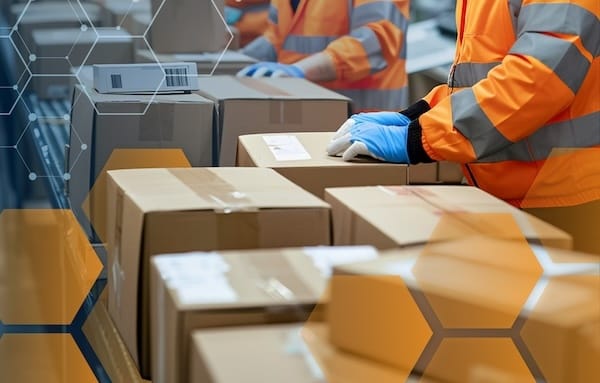
Chicago's rail inefficiency finally got expensive enough to fix. Union Pacific and Norfolk Southern just figured out that trucking 3,000 daily intermodal containers across Chicago might be inefficient. It only took an $85 billion merger proposal to reach this conclusion. Their deal would eliminate crosstown transfers that add $300-$350 per shipment and up to three days transit time. Connecting railroads that were deliberately separated for competitive reasons that no longer make sense—breakthrough thinking.
Regional carriers love this efficiency obsession. OnTrac launched three coast-to-coast services designed to cherry-pick profitable features while avoiding operational complexity. Their hybrid Express service with ClearJet promises two-day coast-to-coast transit. Ground Essentials offers 30% savings over national carriers. 7-Day Play uses AI to predict delivery dates. The business model: all the good parts of FedEx and UPS without the headache of actually being FedEx or UPS.
Why stop at regional consolidation? Specialized sectors with premium margins are seeing similar trends. DHL's acquisition of Tampa-based SDS Rx follows UPS's $1.6 billion Andlauer Healthcare grab earlier this year. They're targeting cold-chain pharmaceuticals where specialty drugs cost $10,000 per dose. Shipping surcharges become rounding errors when the pills cost more than most people's cars.
Logistics Vitals
When constitutional law drives procurement

Peak season planning has never been more dependent on legal outcomes. $750 billion to $1 trillion in tariff collections from legally questionable emergency powers awaits nine justices deciding whether presidents can unilaterally rewrite trade law. The Federal Circuit ruled 7-4 against Trump's authority, but tariffs remain in effect while the Supreme Court considers the appeal. Your Q4 inventory planning now factors in constitutional law interpretations.
November Supreme Court ruling affects $750B-$1T in collected duties hanging in constitutional limbo
Nearly 70% of U.S. imports affected by Trump's reciprocal tariffs from emergency powers (including Canadian lumber, apparently)
Tariff range spans 10% baseline to 50% maximum on Brazil and India imports
25% duties on Canada, China, Mexico justified as fentanyl crisis response
Only 16% of imports would remain tariffed if Supreme Court rules against emergency authority
Warehouse Tech
Yards get respect, robots get real
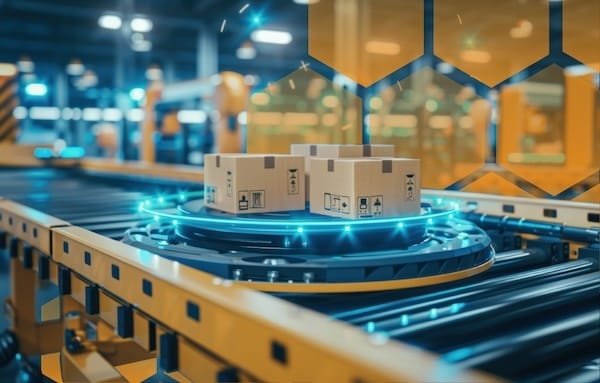
Demo theater is slowly ending. Companies want solutions that actually work in real operations. Yard management systems exemplify this shift, finally getting respect after companies realized manual trailer tracking was the bottleneck strangling their entire operation. 63% want real-time yard visibility. 45% demand WMS integration. The modular YMS evolution includes AI vision tools, dock appointment scheduling, and computer-agnostic systems. Yards weren't the problem—just the last place anyone bothered investing in software that costs less than a decent forklift.
Autonomous trucking is following this practical path. International and PlusAI's customer fleet trials on Texas's I-35 corridor represent actual deployment rather than demo theater. They're using factory-installed sensors and SuperDrive AI. The "crawl-walk-run" approach starts with two operators, progresses to one safety driver, then full autonomy by 2027. As their VP put it: "We don't need to reinvent how trucking is working. We just want to take the existing model that's working for fleets and make it better." Incremental improvement over Silicon Valley promises.
Reality-based thinking shows up in manufacturing too. Universal Robots' UR8 Long cobot at FABTECH has 68.9-inch reach. 30% lighter mass than the UR20. No safety cage requirements for collaborative operations. The robot fits in real factory spaces instead of whatever fantasyland most engineers design for. A collaborative robot that actually gets deployed instead of gathering dust in procurement discussions.
Marketplaces
Tiny fines, AI automation, and Pokemon livestreams

Regulatory fines continue to miss the mark. Temu got hit with a $2 million federal fine for violating the INFORM Consumers Act. They failed to properly disclose third-party seller information. For a company pulling in $53.9 billion annually, that's basically losing quarters in your couch cushions. The Justice Department is "committed to ensuring American consumers have information"—they caught you red-handed but this fine is tip money.
While regulators fumble enforcement, automation keeps advancing. Alibaba's launch of Deep Search AI processes 280 million product listings using natural language queries. Their Accio AI agent automates 70% of manual international commerce tasks. Their survey reveals 63% of SMEs now seek AI support for cross-border trade, probably because human processes finally cost more than the robots designed to replace them.
Apparently everything needs livestreaming now. Walmart launched "Collector's Night" livestreams targeting Pokemon card collectors through their TalkShopLive platform. They're recreating your local hobby shop through a screen, except with Walmart's logistics network behind it instead of that guy who knows way too much about holographic Charizards. The overhead's definitely lower than actual retail space.
Warehouse Quick Deliveries
Peak season optimism meets cold reality
87% of e-commerce brands implemented tariff price increases while 96% expect Q4 international growth—math is apparently optional when writing business plans
War risk insurance premiums rose 60% on Middle East routes because global supply chains needed more volatility
Transportation jobs revised up 6,600 positions in rare good news from the Bureau of Labor Statistics, assuming their math works this time
Universities pivoted from teaching efficiency to resilience because lean operations were apparently just a 1990s fad
Starbucks deployed AI inventory tools across thousands of locations because counting coffee beans requires machine learning now
“We don't need to reinvent how trucking is working. We just want to take the existing model that's working for fleets and make it better.”