- Warehouse Wisdom. Weekly.
- Posts
- Warehouse Wisdom. Weekly. 10/17/2025
Warehouse Wisdom. Weekly. 10/17/2025
Only the most relevant news for SMBs to improve logistics – picked, packed, and delivered without the bias.

Will Schneider
October 17, 2025
In partnership with


🚚 Happy Friday.
UPS is "disposing of" thousands of packages after customs paperwork failures, with $127,000 in tea shipments stuck in Louisville. But wait, it gets better. Ocean rates crashed 68% to $1,431 per container as frontloading exhaustion meets capacity surplus, just as tariffs on Chinese cranes hit 270% when stacked with existing duties. Lot’s to cover this week, so let’s dive in!
Global Logistics
Rates crater while tariffs on cranes hit 270%

Ocean rates collapsed to their lowest levels since late 2023, just as the Red Sea crisis began. Asia to US West Coast dropped 8% week-over-week to $1,431 per container while East Coast routes fell to $3,015. Frontloading exhaustion meets capacity surplus as carriers anticipate Red Sea reopening. When trade war stockpiling ends and supply growth continues, rate floors disappear faster than carrier promises about market discipline.
Trump cranked tariffs on Chinese container cranes to stratospheric levels. The USTR announced 100% tariffs on ship-to-shore cranes and 150% on rubber-tired gantry cranes, effective November 9th. Stack those with existing 25% levies and retaliatory charges, and total tariffs reach 125-270%. China controls 65-70% of the global crane market and 80% of US installations. Intermodal chassis face new 100% tariffs piling onto existing duties of 44.32% and anti-dumping charges of 188.05%. Over 240% combined. The strategy? Price Chinese equipment out of existence to revive American shipbuilding that died decades ago.
California Gov. Newsom delivered a spectacular veto Monday on legislation blocking public funding for port automation at LA and Long Beach. The bill, championed by the local ILWU chapter, aimed to prevent public money from supporting automated equipment. The Pacific Maritime Association warned the measure would stifle investment at ports that saw massive containership backups during Covid. When union chapters try blocking automation funding at the nation's busiest container gateway, governors discover that protecting competitiveness beats preserving manual jobs.
Business news doesn’t have to be boring

Morning Brew makes business news way more enjoyable—and way easier to understand. The free newsletter breaks down the latest in business, tech, and finance with smart insights, bold takes, and a tone that actually makes you want to keep reading.
No jargon, no drawn-out analysis, no snooze-fests. Just the stuff you need to know, delivered with a little personality.
Over 4 million people start their day with Morning Brew, and once you try it, you’ll see why.
Plus, it takes just 15 seconds to subscribe—so why not give it a shot?
Small Parcel Freight
UPS "disposing of" packages while postal rates spike
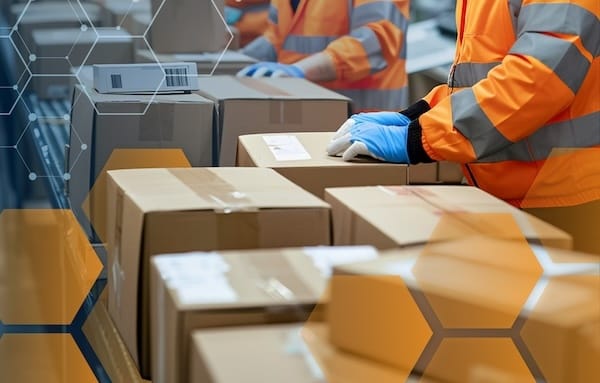
Thousands of US-bound packages are trapped at UPS hubs after the August 29th de minimis elimination. UPS told NBC News it has begun "disposing of" shipments with missing documentation. Tea importer Lauren Purvis has $127,000 worth of matcha stuck in Louisville with no resolution. UPS clears 90% of packages on day one. Thousands daily fail customs checks. NBC News couldn't confirm what "disposal" actually means. Nothing says customer service like destroying engagement rings and diplomas because paperwork didn't arrive on attempt number three.
E-commerce retailers are pivoting to postal channels to dodge formal entry chaos. International postal shipments face emergency tariffs only, not the stacked country-specific rates hitting commercial carriers. Germany's Deutsche Post charges $2.36 per parcel in admin fees while clearing packages through CBP-approved qualified parties. Postal traffic to the US dropped 70.7% compared to pre-August 29th levels. For small importers shipping from Europe or Asia, these postal channels offer lower total duties and predictable clearance. FedEx managed the transition better than UPS by proactively requesting customer data.
USPS joined the peak season fee party with temporary surcharges from October 10th through January 18th. Priority Mail Express, Priority Mail, Ground Advantage and Parcel Select face increases of $0.90 to $16 depending on service and zone. Even government carriers discovered that peak season provides excellent cover for pricing power.
Logistics Vitals
Warehouse market nears inflection point

Prologis reported record Q3 leasing activity as customer sentiment strengthens and tenants commit to long-term build-to-suit spaces. The company's CEO called it "one of the most compelling setups I've seen in 40 years" as occupancy bottoms and rents prepare to climb.
New leases jumped 29% year-over-year to 65.6 million square feet as customers "become more desensitized to short-term noise" from trade wars when making long-term decisions
Occupancy bottomed at 94.8% (290 basis points above US market average) with Q3 closing at 95.3% as supply tightens and development starts sit 75% below peak levels
Market rent declines slowed to 1% while lease mark-to-market hit 19%, translating to $900 million in future net operating income as in-place rents reset higher
Rents could reset 40% above current in-place rates and 20-25% above today's market rents when the cycle inflects, per CEO Hamid Moghadam's projections
Development starts now 25% below pre-Covid levels as the company raised full-year guidance and expanded data center portfolio to 5.2 gigawatts of capacity
Warehouse Tech
CEOs bet on AI while $270M flows to robots
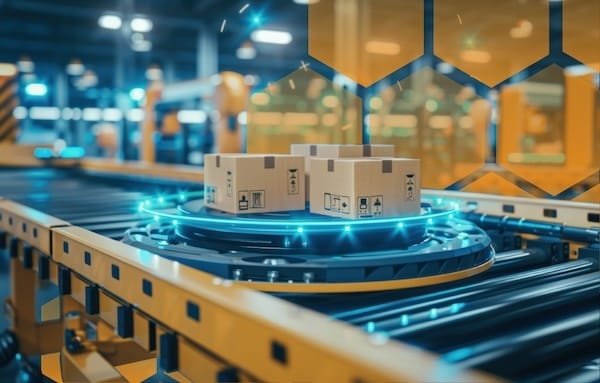
Across the industry, automation extends beyond warehouses into procurement and material handling. Dexory raised $165 million to expand its robotic warehouse stock management system. The 10-year-old UK company now has secured $270 million total in funding. Dexory's autonomous robots extend to 15 meters in height, scanning warehouse racks to assess stock. The company completed 500 million pallet scans last month, distilling information into software-as-a-service insights for customers including GXO, Maersk, and DHL. Being "full stack" makes investors comfortable. They're buying software insights, not robots. Hardware becomes the data collection tool.
Manufacturing CEOs are betting on AI despite tariff chaos, with 68% naming it a top investment priority and 69% planning to spend up to 20% of budgets on it. Manufacturing CEOs are moving from generative AI to agentic AI, where bots automatically complete tasks. They expect ROI within one to three years, particularly in procurement. Only 18% prioritize reconfiguring supply chains. Restructuring takes time and capital while tariffs fluctuate monthly. CEOs automate what they control and pray about what they don't.
Cyngn deployed autonomous tuggers at G&J Pepsi, the largest independent Pepsi bottler in the US. The DriveMod Tugger installation serves customers across Ohio and Kentucky, supporting 650+ products managed by 1,900+ employees. G&J Pepsi just completed a 77,000 square foot warehouse expansion. Century-old family businesses deploy robots. Automation becomes operational necessity, not innovation theater.
Green Logistics
AI makes sustainability economically viable

AI and digital twins are solving trucking's sustainability puzzle before fleets commit capital. EROAD's simulation models test EV, hydrogen, and renewable diesel scenarios using real routing data. Digital twins learn from actual conditions while AI cuts waste through better backhaul matching. Cold chain benefits most. CoreTemp algorithms catch temperature drift before products spoil, and 80% of safety camera recordings exonerate drivers. When AI proves EVs cost less, suddenly every fleet discovers environmental consciousness. Economics trumps ideology every time.
CALSTART's 2025 Zero-Emission Trucks dashboard added six new states to the original 17, proving zero-emission trucking infrastructure is no longer regionally clustered. The report now tracks 23 states plus DC across targets, planning, economic development, and infrastructure. CALSTART added an Economic Development dimension this year, analyzing tax and workforce policies that encourage clean transportation investment. When red and blue states both adopt zero-emission infrastructure, it's not ideology. It's economics.
Warehouse Quick Deliveries
3PLs unprepared as rates stay brutal, fraud hits €800M
Owner operator invoices rose $16 year-over-year to $1,317 while fleet invoices fell $92 to $1,817, per Triumph Financial Q3 data
Order batching cuts warehouse picking labor by over 50% through grouping multiple orders into single trips, eliminating redundant aisle walks
Avacraft CEO cut supply chain time from five-six hours daily to weekly using Amazon's warehousing and logistics tools
Manufacturers frozen on nearshoring ahead of USMCA review, maximizing compliance at existing Mexico facilities instead
Retailers estimate 15.8% of sales will return this peak season while fraud jumped to 9% of all returns
"By integrating DriveMod into our material handling processes, we're not only addressing today's labor challenges but also positioning our business to meet the growing demands of tomorrow."