- Warehouse Wisdom. Weekly.
- Posts
- Warehouse Wisdom, Weekly. 12/05/2025
Warehouse Wisdom, Weekly. 12/05/2025
Only the most relevant news for SMBs to improve logistics – picked, packed, and delivered without the bias.

Will Schneider
December 05, 2025

🚚 Happy Friday.
10 Roads Express is shutting down after 47 years hauling mail, citing a 70% revenue loss as USPS shifted work to brokers, eliminating 2,606 drivers in the largest trucking closure since Yellow. UPS and FedEx raised fuel surcharges during peak season while ground fuel costs rose 8.62% but surcharges jumped 24.3%, and both carriers grounded aging cargo planes after a tragic explosion. Meanwhile, freight demand measurement reveals whose struggle is real: the legacy index shows 11% decline while the new index weighted toward stable sectors drops just 3%. Peak season becomes less about growth projections and more about survival math. Let’s dive in!
Global Logistics
USPS contractor collapse meets Chinese port automation surge

10 Roads Express is shutting down after 47 years hauling mail for USPS. The company notified the Postal Service it will cease all routes by January 30th, citing a 70% revenue loss driven by USPS shifting work to brokers and insourcing transportation. The closure eliminates 2,462 trucks and 2,606 drivers. The largest trucking shutdown since Yellow's 2023 bankruptcy. Your biggest customer spends two years systematically eliminating your business model. 47 years of service buys you exactly 60 days to wind down.
Seattle and Philadelphia residents can now get Amazon's 30-minute delivery for $3.99 per order if they're Prime members, $13.99 otherwise. The service uses "specialized smaller facilities" positioned near residential areas, competing directly with DoorDash and Instacart. Amazon discontinued a similar one-hour Prime Now service in 2021 after seven years. The company plans to invest over $4 billion to triple its delivery network by 2026. Amazon keeps launching fast delivery services until the economics finally work.
Shanghai's port complex handled its 50 millionth container on November 26th, a month earlier than last year and on track to exceed 2024's record of 51.5 million TEU. Nearby Ningbo-Zhoushan hit 40 million TEU for the first time, up from 39.3 million in 2024. Both facilities rely on remote-controlled cranes, unmanned yard vehicles, and AI-driven planning systems managing operations in real time. American postal contractors collapse. Chinese ports automate their way to record volumes. The infrastructure gap becomes a competitive chasm.
Run ads IRL with AdQuick

With AdQuick, you can now easily plan, deploy and measure campaigns just as easily as digital ads, making them a no-brainer to add to your team’s toolbox.
You can learn more at www.AdQuick.com
Small Parcel Freight
Fuel surcharges climb while cargo planes sit grounded
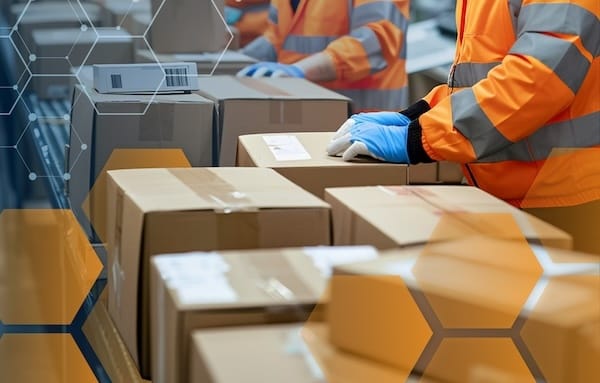
UPS and FedEx increased fuel surcharge calculations during peak holiday shipping season. FedEx implemented a 1.5% increase for domestic services on Monday, while UPS follows January 5th with a 1% bump for Ground and air offerings. At $3.85 per gallon diesel, UPS Ground shipments now carry a 21.75% fuel surcharge instead of 20.75%. Ground fuel costs rose 8.62% year-to-date while UPS Domestic Ground fuel surcharges jumped 24.3% over the same period. FedEx's Chief Customer Officer called the pricing environment "competitive but rational" during September earnings, noting fuel surcharge increases benefited per-package revenues. The math works differently for shippers watching their costs climb three times faster than actual fuel prices.
Peak season brings grounded cargo aircraft for both carriers after pulling aging planes from service following a tragic explosion. FedEx and UPS must now rely more heavily on USPS and Amazon's logistics network to absorb overflow volume. Concentrated supplier dependencies meet unexpected outages, and the financial damage flows directly through revenue and margins.
Tariffs compound the pressure as retailers exhaust their inventory stockpiling strategies. Many importers forced portions of new tariffs onto overseas suppliers while shouldering the rest themselves, but those buffers are running dry.The eliminated $800 de minimis rule particularly impacts small e-commerce retailers on Amazon, Etsy, and Shopify platforms, while adding processing workloads that slow delivery times further. The obstacle? Shipping companies handle increased customs processing at ports of entry while small businesses importing from China and Asia face the highest tariff rates on toys, clothing, and household items. Fuel surcharges rise faster than fuel costs. Cargo capacity shrinks. Tariffs eliminate pricing buffers. Holiday shipping turns into pure cost absorption with nowhere left to hide.
Logistics Vitals
Freight demand splits between stable and struggling sectors

SONAR released expanded truckload tender data revealing a market where measurement methodology determines the narrative. The new SONAR Truckload Volume Index tracks twice the data of legacy metrics, weighted heavily toward consumer packaged goods, food, and refrigerated freight. Both indices point down year-over-year, but magnitude tells different stories about which carriers are drowning and which are treading water.
11% year-over-year decline in legacy Outbound Tender Volume Index measuring comprehensive freight demand including volatile automotive and industrial sectors
3% year-over-year decline in new SONAR Truckload Volume Index weighted toward stable consumer packaged goods, food, and shorter-haul traffic
7.35% tender rejection rate in the new dataset compared to 6.49% in legacy data, suggesting carriers maintain slight pricing power in select freight segments
14.85% reefer rejection rate and 13.51% flatbed rejection rate versus 6.09% dry van rejection rate, revealing specialized equipment operators face fundamentally different markets
Massive capacity exits implied by rejection rates holding steady despite sharp demand declines, with English language proficiency enforcement removing drivers throughout Q3 and Q4.
Marketplace
Retailers chase speed while Amazon makes returns disappear

Delivery speed obsession reshapes Target, Best Buy, and Walmart operations as third-party marketplaces explode. Target piloted stores segmented into backroom fulfillment operations versus high-traffic locations prioritizing in-person shopping. Best Buy launched a marketplace in August with 1,000+ sellers carrying 11x more products than physical stores. Walmart's China business delivers 80% of online orders within one hour, while a third of U.S. ecommerce orders now arrive within three hours. Speed becomes advertising revenue with extra steps. Best Buy's marketplace sellers use the My Ads self-serve platform, while Target's gross merchandise sales jumped 50% year-over-year with mid-teens ad growth through Roundel. Walmart uses retail media spend to clear seasonal inventory, ramping Hershey's advertising up or down to avoid getting stuck with discounted Halloween candy. Delivery speed becomes the product. Advertising becomes the inventory management tool. Retail operations transform into data problems solved by spending money strategically.
Amazon upgraded returnless refund options allowing sellers to set maximum prices between $1 and $75 for items customers can keep without returning. The program excludes customers with return abuse histories and items above $75. Amazon expanded return kiosks to 68 Winn-Dixie locations in Florida while launching doorstep pickup through USPS. Consumers expect free, fast, frictionless returns while merchants face rising fraud exposure and operational costs that pressure margins.
Costco sued the administration seeking tariff refunds before U.S. Customs finalizes payments on December 15th. The retailer joins Revlon, Bumble Bee Foods, and other companies filing separate suits to preserve refund eligibility while the Supreme Court weighs tariff legality. Customs collected $108 billion in levies through October under the International Emergency Economic Powers Act. If the Court strikes down the tariffs, CBP faces an unprecedented wave of refund requests from companies that paid duties all year on national emergency declarations.
Warehouse Tech
U.S. robotics fights ten-to-one cost disadvantage

U.S. component quotes run ten times higher than Chinese suppliers, according to Standard Bots CEO testimony to Congress about robotic arms used in Lockheed Martin, Verizon, and NASA factories. The New York startup proposed increased federal MEP funding, a lending program modeled after Energy Department loans, and either Chinese robot bans citing national security risks or tariffs countering foreign subsidies. The Commerce Department's Manufacturing Extension Partnership helped thousands of companies generate $60 billion in new sales and retain 1.4 million jobs since 2000 before facing defunding attempts earlier this year. Standard Bots warns that inexpensive Chinese robots will flood U.S. markets as automation demand swells, arguing competitors already operate with national strategies while America lacks a specific, actionable, funded plan for advanced manufacturing. Your industrial robot components cost ten times the competition's prices. Calling for government intervention becomes the only math that works.
Tutor Intelligence raised $34 million in Series A funding led by Union Square Ventures to scale AI-powered warehouse robots that learn from human experience. The MIT spinout's robotic arms log tens of thousands of production hours annotated by human "tutors" who label data improving the models. The robots deploy within 30 days, become operational within one day, and operate on robot-as-a-service subscriptions mapping to traditional labor costs rather than massive upfront capital. About 90% of U.S. factories still operate without robots, forcing reliance on arduous manual labor. Small manufacturers representing 99% of U.S. producers, many with fewer than 20 employees, get priced out of traditional automation solutions that prove too rigid or too capital-intensive. Collect real-world data, have humans annotate it, reinvest experience to make robots faster and smarter, repeat until generalizable intelligence emerges.
Daimler Truck and Torc Robotics selected Innoviz as short-range LiDAR supplier for Level 4 autonomous Freightliner Cascadia trucks in series production. The InnovizTwo sensors integrate with Torc's virtual driver system to detect, classify, and track objects in real time across diverse road and weather conditions. Deployment targets highway and regional routes across North America to improve fleet operational efficiency and road safety.Innoviz positions itself as automotive-grade LiDAR supplier while demonstrating the redundancy requirements for commercial Level 4 autonomy. Autonomous trucking moves from pilot programs to series production partnerships with major OEMs. The technology transitions from "potentially revolutionary" to "someone's actually building this at scale."
Warehouse Quick Deliveries
AI planning to merger delays
Agentic AI systems transform supply planning into continuous autonomous operations as Blue Yonder processes over 25 billion daily operations
Suez Canal container ship transits dropped to second-lowest weekly total of 2025 with just 28 containerships passing through despite ceasefire optimism
Union Pacific delayed $85 billion Norfolk Southern merger filing two weeks to December 16th as competing railroads intensified opposition
Retailers convert stores into fulfillment nodes with 10-15 mile radial zones for same-day delivery
"Today U.S. quotes are ten times higher than Chinese suppliers. If other countries are subsidizing their robots, like China, how do we expect American companies to compete to ensure a level, fair playing field for the domestic robotics industry?"